“Too many cooks spoil the broth” –English proverb 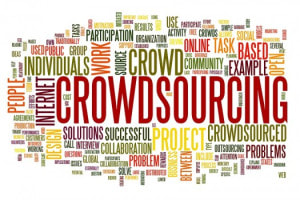 Today’s adventure in editing was an “offer” I had not seen since I first started out in editing. An author wanted me to edit a chapter of his book—for free (“it was only one chapter”). Presumably as many editors as he had chapters in his book were also contacted with this deal. His goal was to end up with an edited book for nothing. Almost every editor has been approached with this scam at some point during their career. Sometimes we are offered a pittance; sometimes we are promised “great exposure.”
“Next time I go grocery shopping,” said fellow editor Katherine Barber, “I’m going to say, ‘Hey Loblaws, give me my groceries for nothing and I’ll tell all my friends on Facebook and Twitter how wonderful you are.’ ” You wouldn’t do it with your grocery store—it is just as inappropriate when dealing with a professional editor. It is usually an inexperienced author who tries this, one who does not understand the role or the value of an editor. One of the primary goals of editing is consistency, consistency, consistency. How do you achieve this with a dozen different editors? Yes, editing can be expensive (it is a professional service after all). If you truly think you have “probably the greatest story ever written” (actual quote), don’t shortchange your work by farming it out in small chunks to many different editors in an effort to save money. You might actually have the greatest story idea ever, but if you are an inexperienced writer it takes a lot of work—by you and your editor—to get it to greatest story level. How can you afford an editor? You are creative—think creatively! But be sure to discuss your proposal with your editor before editing begins. After you receive the invoice is not the time to propose your idea. Here are some suggestions to get you started (with many thanks to the members of the Editors’ Association of Earth Facebook group for their wonderful recommendations and anecdotes). Barter Everyone has something to offer and many editors are open to bartering. The EAE editors have received bottles of wine (what wouldn’t I do for some bottles of wine?), pieces of art, laundry or grocery delivery, meals, or services such as house painting or installing carpet. Remember that bartering is still counted as income and subject to tax (editors will have to issue a receipt with an equivalent dollar amount and submit at tax time). Crowdfund Crowdsourcing is splitting a large task up into very small projects that are completed by many different people. Instead of splitting up the job into pieces, split the cost of hiring a good editor. Crowdfunding is raising money through small contributions from a large number of people via the Internet and social media. Pubslush is a crowdfunding platform specifically for authors, but there are many other crowdfunding sites, such as Indiegogo and Kickstarter. You could offer contributors a signed copy of your book once published, a chance to name a character, or an acknowledgement within the book. Hire a recent grad It is very difficult for a new editor just starting out to establish themselves and generate clients. A recent grad from a publishing program may be willing to do the project for less money to build their project list. They should have formal editing training. You want them to have the skills—they just may not be as quick as a more experienced editor. The Publishing program at Ryerson University in Toronto (where I studied publishing) offers a job announcement service for grads. You can contact them with the details of your project and they will distribute your job posting to current students and alumni free of charge. Check your local universities for a similar service if you live outside the Toronto area. Do the work yourself Maybe hiring an editor is completely out of the question for you financially. There are many books out there that can teach you the basics. It just takes an investment of your time—and a library card. The bonus is that you now will have these self-editing skills for your next project. Here are some of my favourites:
Get a little help from your friends Have as many people as possible—your spouse, friends, relatives, the guy down the street—read your manuscript and provide feedback. This is a good start, but know that because these people have a relationship with you, their feedback is going to be censored somewhat. As famous editor Alan D. Williams has said, “An editor [does] something that almost no friend, relative, or even spouse is qualified or willing to do, namely to read every line with care, to comment in detail with absolute candor, and to suggest changes where they seem desirable, or even essential. In doing this the editor is acting as the first truly disinterested reader, giving the author not only constructive help but also, one hopes, the first inkling of how reviewers, readers, and the marketplace…will react, so that the author can revise accordingly.” You do need unbiased eyes to assess your work, so another option is to join a writers’ group or writing circle. They are all writers and committed to writing. Their input could be invaluable. But it is not a one-way street. You will be expected to help with other writers’ works too. Check your local library for a group that meets face-to-face or check the Web for online writing groups, such as Scribophile. Share some of your creative ideas or your past experiences. Happy Adventures in Editing! P.S. Make sure to visit Katherine’s Wordlady blog too—it is wonderful.
1 Comment
ed∙i∙tor \e-də-tər\ n (1649) 1. A person who prepares literary material for publication or public presentation Editing is both a science and an art. It is a combination of training, experience, and natural ability. You should be comfortable with your editor and confident in her decisions. The following are characteristics that all good editors should have (and qualities I think I can bring to your project):
1. Broad knowledge base A good editor has both wide-ranging and specialized knowledge to be able to pick up factual errors. She has to be a bit of a Renaissance person (or polymath)—and she is usually a really good Trivial Pursuit or QuizUp player. 2. Meticulous A good editor has an almost infinite capacity for detail. She requires a great sense of quality and possesses high standards of accuracy. She questions everything and applies a critical eye to the tiniest detail in order to recognize patterns and locate inconsistencies. You could use the word obsessive, but I prefer meticulous. 3. Loves language Not only must a good editor love the written word, but she must also have flawless knowledge of grammar and style. Or at least be able to look it up if she is not sure. She is often a bit of a grammar guerilla: tiny mistakes in the newspaper seem to immediately jump off the page. She has an appreciation for the Oxford comma and knows that despite what we were taught in school, it is not a mortal sin to leave a participle dangling. She also knows that when the right words are put together properly, they can be as beautiful as a work of art. 4. Diplomatic Telling an author that there is a major problem with the manuscript that they have devoted months or years of their life to creating is like telling a mother that her child is funny looking. Tact is vital. So is humility. A good editor acts as a coach to her writers. She is able to be encouraging while still pointing out the areas that need correction. 5. Able to meet deadlines Publishing is rife with deadlines. If you are late in one stage of the process, it causes a chain reaction everywhere else down the line. A good editor has to be able to estimate timelines and meet deadlines. She also needs to be flexible because there will be an inevitable bump in the road with almost every project. Don’t forget to check out my website. Happy Adventures in Editing! |
AuthorI am freelance copy editor, proofreader, and instructor based in Toronto. Enjoy my adventures in editing! (Note: I transferred my blog over and lost my comments along the way, unfortunately. Please add new ones.) Archives
October 2017
Categories
All
|
 RSS Feed